Whitstable is the closest coast to Canterbury, and the oldest way to it is not the road. A railway that once carried oysters from the harbour up to the city has left its trackbed behind as a traffic-free path, and the modern bus does the same job in a little over half an hour. You do not need a car for this day out. Parking at the harbour is the one thing that reliably goes wrong.
There are two honest ways from Canterbury to Whitstable, and both end at the water. Ride or walk the Crab and Winkle Way, the old Canterbury & Whitstable Railway trackbed, which runs from Canterbury West station to the harbour. Or take the Stagecoach 400/401 from the bus station, which runs every 15 minutes and takes about 35 minutes. Driving is possible, but the Gorrell Tank car park by the harbour fills early in summer and on bank holidays, and you would be giving up the best part of the trip.
The Crab and Winkle Way is a 7.5 mile (12 km) route between Canterbury West station and Whitstable harbour, and Explore Kent, who publish the route, describe it as a linear path rather than a loop. It is signed from Canterbury West station and joins National Cycle Route 1 near the river at Pound Lane. From Harbledown it is mostly traffic-free. The line beneath it was the Canterbury & Whitstable Railway, one of Britain’s earliest, and the path still reads as an old railway bed rather than a made-up trail.
For planning, the start postcodes are CT1 2AH at Canterbury West and CT5 1SD at the harbour. OS Explorer 150 and Landranger 179 both cover the route. Explore Kent keep a printable PDF map on their Crab and Winkle Way page, which is the one to print rather than trusting a phone signal through the woods. The walks around Canterbury piece has the wider network this path joins.
The Winding Pond comes early and is a picnic spot more than a destination. Then the route runs alongside the Blean Woods RSPB reserve — Blean Woods National Nature Reserve covers over 11 square miles and holds the 13th-century church of St Cosmus and St Damian — before Clowes Wood, which is known for its nightjars. None of this needs a diversion; the path carries you past it. What changes is how busy it gets, which follows the weather and the school holidays more than the season.
Explore Kent puts the ride at about 1 hour 15 minutes for an easy pace, about 55 minutes steady, and about 30 minutes for a strong rider, one way. Those are their figures, and the easy pace is the realistic one if the point is a day out with stops. On foot the whole way is a much longer day: walk there and back and you have spent most of it walking, which is fine if that is the plan and a mistake if the harbour was meant to be the main event. Kent Cycle Hire is the rental Explore Kent name; book a bike ahead rather than assuming one is free.
Stagecoach run routes 400/401 from Canterbury bus station every 15 minutes, and the tourist board’s harbour page gives 401/402 at about 35 minutes to Whitstable. The Stagecoach timetable PDF is dated May 2024, which is the point to notice: check the current timetable on the operator’s page before you build an evening around the last bus. DayRider and MegaRider tickets are bought in the Stagecoach app. Fares move, so read the app for the day you travel rather than trusting a figure you saw elsewhere.
Coming home is where the one-way logic helps. Whitstable station is about a 13-minute walk from the harbour, with trains running about every 30 minutes from London Victoria or St Pancras. For someone based in Canterbury that matters when the weather turns or the tide comes in and the legs have gone: ride there, put the bike on the train or take the bus back, and nobody has to ride home against the wind. Riding both ways is the honest full day; the bus both ways is the easy half day.
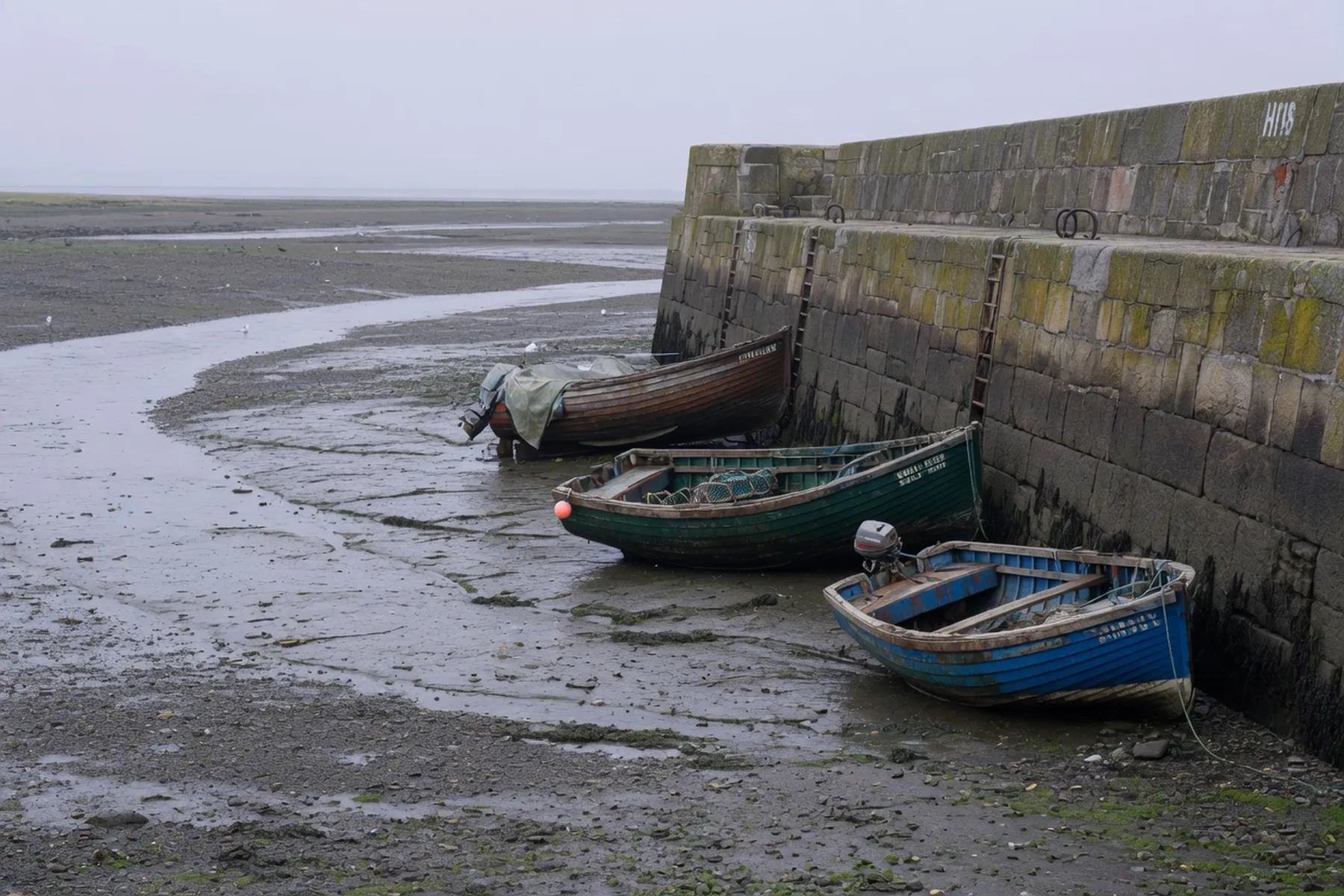
Whitstable harbour is a working, drying harbour, and that one word changes what you see. It dries to mud at low tide, leaving boats settled on the bottom and the walls looking over bare ground; at high water the same place is full and busy. Entry is free and it is open year-round. Because the two states look like different places, the tourist board links to BBC 7-day tide tables from the harbour page — check them before you set out, and do not rely on a tide time quoted anywhere, because they shift every day.
The harbour exists for the oyster trade, and the Gamecock, the restored oyster yawl, sits there as the reminder. This is a working place with boats and moorings rather than a promenade marina, and that is exactly why people come. Eating oysters beside the water is the obvious thing to do, and the harbour and the streets behind it have the places for it. Prices change with the season and the house, so read the board where you eat instead of expecting a fixed figure.
The South Quay Shed is the harbour’s multi-purpose venue, used for events and worth a look even on an ordinary day. The Whitstable Coastal Trail runs from here. Boat trips — the Thames sailing barge Greta and the ex-RNLI Chieftain — run April to October, but the operator’s page is the source for this year’s dates and sailings, so check it before you plan around one.
The tide rule is simple and it is the one piece of advice that changes the day. Low water shows you the mud, the beached boats and the scale of the harbour; high water gives you the boats afloat and the busy working feel. Neither is wrong, but they are not the same outing. Look at the BBC 7-day tables the tourist board links to, pick the state you want, and let that decide whether you ride fast, take the bus, or stop at the Winding Pond for a while first.
The WhitSparkle Ball fills the South Quay Shed on 14 November 2026, tickets £20, with the live band FNKHAUS and a raffle. It is the notable night in the next few weeks and a good reason to come by bus in the dark. Other evenings sit on the same listings — a talk on the history of witchcraft and women on 24 September, art and acoustic nights through October and November — but every date and price is on the organiser’s page at whitstable.co.uk, so check there rather than taking one from this article. The Whitstable Rocks oyster festival already ran in September and is over; do not plan a visit around it.
Parking is Gorrell Tank car park, CT5 1BZ, and it gets very busy in summer and on bank holidays — another reason to leave the car in Canterbury. Public toilets, including a Changing Places facility, are on South Quay. The harbour is mostly flat with wide paths, with a ramp down from Gorrell Tank and a lift in the South Quay Shed. The harbour office keeps hours of 09:00 to 16:00 Monday to Friday, and Whitstable Cars on 01227 261561 is the taxi if the last bus has gone.