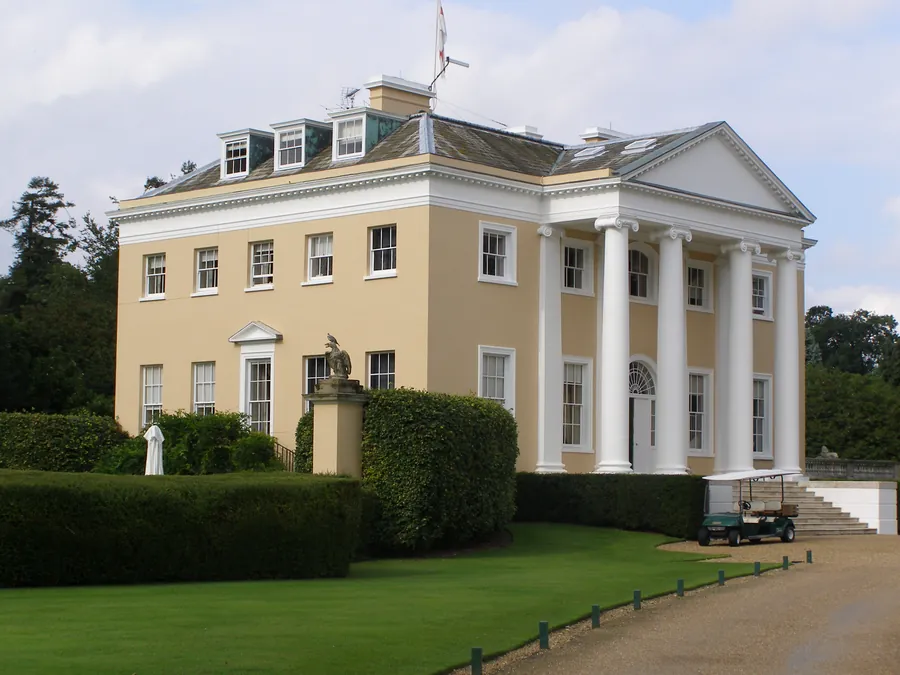
Howletts sits in the parish of Bekesbourne, five kilometres south-east of Canterbury, in the parkland of an eighteenth-century house. It was established as a private zoo in 1957 by John Aspinall, opened to the public in 1975, and is now run by the Aspinall Foundation — which also operates Port Lympne, bought in 1973 near Hythe.
It is not a conventional day-out zoo, and the difference is the point.
Aspinall’s approach was to keep small numbers of species in very large social groups with a great deal of space, and to breed them. Howletts holds:
The largest captive group of western lowland gorillas in the world, in extensive enclosures — and Howletts has an exceptional breeding record with them.
A large African elephant herd, in one of the largest elephant enclosures in Britain.
Javan gibbons, black rhino, clouded leopards, Przewalski’s horses, bison, tigers and a substantial collection of endangered primates.
The Foundation’s stated purpose is rewilding — returning captive-bred animals to protected habitat overseas — and it has sent gorillas, black rhino, Javan langurs and other species back to the wild. Visitors consistently pick up on this: the recurring comment is that the place feels like a conservation project that admits visitors rather than an attraction with animals in it.
Large and green. The park occupies mature parkland with big enclosures and long walks between them, which is pleasant and which means a full day rather than two hours.
Fewer species than a big zoo, deliberately. If you want breadth, Howletts is not it; if you want to watch a gorilla family for half an hour, it is.
Keeper talks run through the day and are the best part of the visit — the elephant talk in particular is singled out repeatedly.
Two honest notes from visitor feedback. Catering is expensive and a picnic is widely recommended. And there are empty enclosures in parts of the site, which some visitors find dispiriting; that is partly the consequence of a collection that moves animals out to Port Lympne and to the wild.
Time: a full day. The site is large and spread out.
Terrain: parkland with slopes and long distances. Comfortable shoes, and it is hard work with a pushchair in places.
Weather: largely outdoors, with some indoor houses. It works in rain but you will be in it.
Booking: advisable, and online tickets are usually cheaper.
Food: there are cafés, but a picnic is the local advice.
Facilities: shop, toilets, play areas.
By car: five kilometres south-east of Canterbury at Bekesbourne, signposted from the A257. Parking on site.
By train: Bekesbourne station is about a kilometre and a half away on the Canterbury East to Dover line — one of the few zoos in England with its own station within walking distance.
By bus: limited services; check timetables.
Worth knowing about. The Foundation’s other park, near Hythe forty kilometres south, is much larger — a safari-style reserve with a truck-based experience through large enclosures, plus overnight accommodation. Combined tickets are sometimes offered. If you want the drive-through experience, that is where it is.
The largest captive group of western lowland gorillas in the world, and one of Britain’s largest elephant herds.
Both — it is run by the Aspinall Foundation, whose stated aim is breeding endangered animals for return to the wild, and it has sent gorillas and black rhino back to protected habitat.
A full day. The site is large and the walks between enclosures are long.
Not at Howletts. The Foundation’s Port Lympne park near Hythe has the safari-style experience.
Yes — Bekesbourne station is about a kilometre and a half away on the line from Canterbury East.