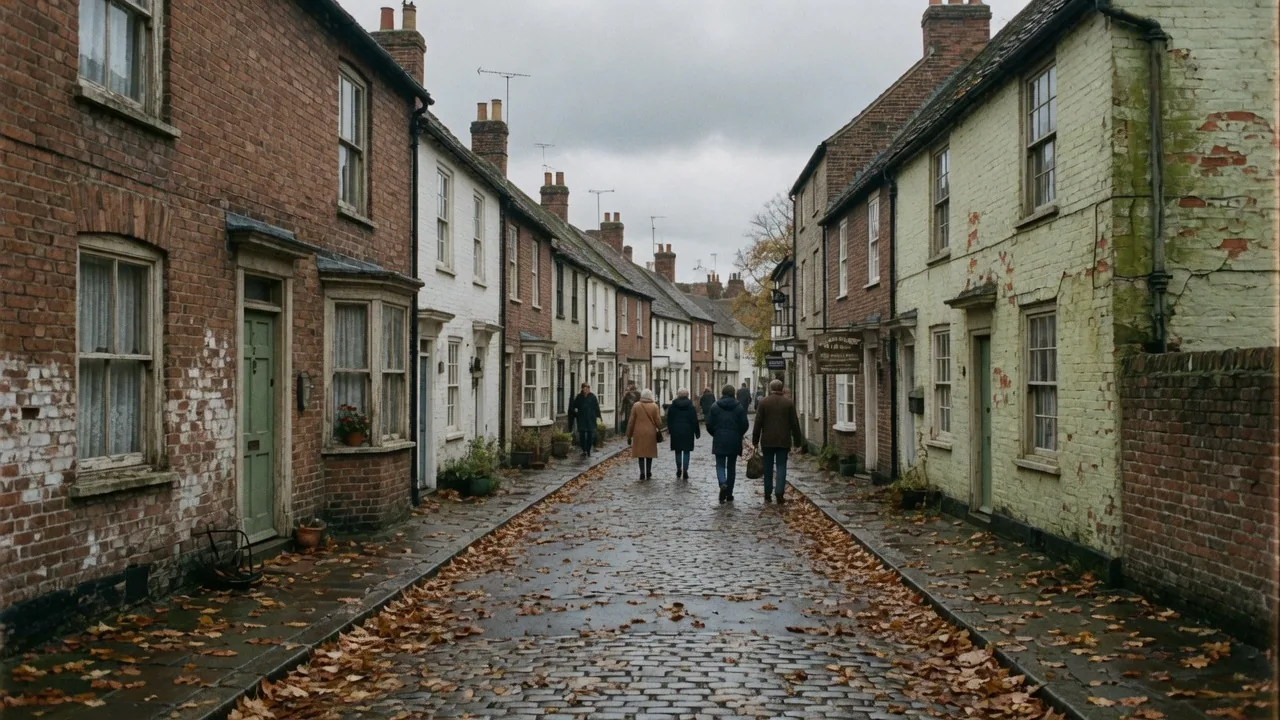
Canterbury is a year-round city in a way that a pure resort is not. Kent, Canterbury Christ Church, a working high street and a cathedral that never closes for the season keep the lights on in January. That does not mean every month is the same month. The streets, the river, the gardens and the beds all run on different calendars, and picking a Saturday in August is a different holiday from a Tuesday in May.
What follows is the shape of the year, the effect of term time, and the practical reasons to come in September even though the search data barely records anyone asking.
Come in April, May or September if you want the city without the crush. Come in June for long evenings on the Stour. Come in August only on purpose. Come in winter if you like wet stone, empty lanes and a cathedral in low light. Do not arrive at midday on a summer Saturday and expect a quiet nave at Canterbury Cathedral.
The cathedral is the year-round draw. Everything else — the gardens, the punts, the student cafés, the car parks — moves around it.
This is the season the city would advertise if August did not pay the bills. The streets are quieter. The gardens come out. Westgate Gardens put on bedding and blossom, the oriental plane is in leaf, and you can sit under it without sharing the bench with a coach party. St Augustine’s Abbey is a ruin in a garden at this time of year: flower beds against flint, and enough space on the grass to hear the audio guide.
The lanes work in spring. Butchery Lane, Palace Street and the Borough are for walking, not for shuffling. You can stand in Mercery Lane and look at Christ Church Gate without a photograph being a negotiation.
East Kent is one of the drier corners of England, but spring still means a waterproof. A wet day here is a cathedral-and-museum day rather than a write-off — the rain guide is a normal Canterbury page, not a consolation.
Howletts, at Bekesbourne, is an outdoor park. Spring is kinder than high summer for walking it, and the animals are not the only reason to go; the site is large enough that a fine April weekday feels like a conservation collection rather than a queue.
July and August are when the rest of the country decides Canterbury is a day trip. The High Street fills. The precincts fill. The punts book out. Burgate from late morning is a slow walk behind people who have just been set down at the bus station.
The cathedral does not get bigger in summer. It gets a timed entry, a thicker visitor route, and coach parties in the early afternoon. The building is still the reason to come. The visit is not the quiet one you will have in February. Our cathedral guide is blunt about allowing three hours; in August, add the time you will spend in the precincts before you are inside.
Early is the only summer tactic that works. Be at the Westgate when the gardens are still damp. Be at Christ Church Gate when the visitor route opens. Eat lunch away from Burgate — Palace Street, Northgate, the Goods Shed — and do the river in the evening, when the light on the Weavers House is the thing people remember and the day-trippers have gone back to the coach.
School holidays move the needle as much as the weather. A midweek in term-time July is not the same as the first fortnight of August. If your dates are a holiday week, book the punt, book dinner, and treat parking as a morning decision, not a hope.
This is the season to pick if you can move a date. The willows along the Great Stour turn. Westgate Gardens go gold. The ruin at St Augustine’s sits in a quieter precinct than it has had since May. Days shorten — by late October you want to be off any walk to Fordwich with daylight in hand — but the city is still open.
The punts run on into the autumn with a thinner timetable and cancellations in high wind. An afternoon on the water in October, with the backs of the medieval houses in the low sun, is the Canterbury that the August photographs do not show. See punting on the Stour.
October also brings the city’s main festival season. The Canterbury Festival fills halls, churches and a few streets; some of it is ticketed, some of it is not. Dates shift each year. Do not plan around a date you found in an old blog. Check the festival’s own site if that is why you are coming, and check the cathedral’s if you hoped to use the nave on the same weekend.
After the schools go back, the car parks breathe. Park and ride is no longer a moral argument; it is merely the sensible one.
Canterbury in winter is a stone city in rain, which is what it has always been. The cathedral is at its most atmospheric in low light. The crypt does not care what month it is. Evensong in Canterbury Cathedral, sung most days in choir term, is the free hour that makes a dark afternoon a visit rather than a Burgate shopping trip.
The lanes empty. Mercery Lane is yours. Westgate Gardens are wet and quiet, and the plane tree holds the sky. A few seasonal hours drop — punts are limited and weather-dependent, some independents close on Sunday evenings and Mondays — but this is not a shuttered resort. The Beaney stays open. The Goods Shed stays open. The pubs have fires.
Christmas is the winter version of the summer spike: lights in the streets, a market, full services in the cathedral, and car parks that behave as if it were August. Advent processions and carol services are free to attend and are the building at its most used. They also close sections of the visitor route. Check Canterbury Cathedral’s own site before you build a day around a nave closed for a carol service.
A wet Tuesday in January is a very good time for the crypt and the Beaney, if you pack a coat. See Canterbury in the rain.
Canterbury has two universities — the University of Kent on the hill to the north, and Canterbury Christ Church University with buildings in and around the centre — and several thousand students through the academic year. Term at Kent and at Canterbury Christ Church runs, in outline, from autumn into December and from January into early summer, with a long vac in July and August. Exact dates sit on the universities’ own calendars and move a little each year.
What that means for a visitor is more useful than it sounds. In term, the cheaper cafés and the noodle-and-burrito layer stay lively. Palace Street and the northern High Street have an evening economy in November that Padstow does not. Out of term, in July and August, the tourist end of the city takes over: Burgate, Sun Street, the precincts, the menus with pictures.
It also changes the feel of a Monday. In term, the city is a student town that happens to have a cathedral. In the summer vac, it is a cathedral town that happens to have empty lecture rooms. Neither is wrong. They are different trips. Our eating guide is explicit about using the student streets and leaving the cathedral quarter for a coffee and the view.
Graduation weeks and the start of autumn term put a short, local spike into restaurants and the cheaper rooms. They do not reach August density. They are worth knowing about if you wanted a quiet Monday in the Goods Shed.
Everything else on this page is weather and crowds. The cathedral is the constant.
It is open through the year. It is a working church. Opening hours change with services, ordinations, enthronements and the choir term. Sections close at short notice. Check the cathedral’s own site for the day you are going, not a third-party hours box.
Evensong is the year-round gift. It is free to attend. It is the building doing what it was built for. In choir term it is sung; in the recesses it may be said. Either way, the visitor route pauses while it happens, so a late-afternoon sightseeing plan that collides with evensong is not a plan.
Tower tours, when they are running, need booking and a spiral staircase. Winter light in the nave is better than summer light for the glass, if you can live without sitting on the grass afterwards.
A first visit in any month should still allow three hours. The month only decides whether those three hours in Canterbury Cathedral are shared with four coach parties.
There is no free parking in the centre. Queningate and the multi-storeys fill before mid-morning on fine weekends, through the school holidays, and between Christmas and New Year. Queningate, the park by the cathedral, is the one that fills first in every season that has visitors.
Park and ride at Wincheap and New Dover Road is the summer answer and a perfectly good winter one. The parking guide is the operational document. This page is only saying: Queningate in August is the whole morning, and Wincheap in May is a two-minute decision.
A wet day fills the multi-storeys faster, not slower. Arrive by train if you can; both stations are inside ten minutes of the walls.